Almost every candidate has this moment at some point during an interview. You finish an answer and immediately feel that something went wrong. Maybe you rambled. Maybe you forgot an important detail. Maybe your English suddenly became less clear halfway through the explanation.
The real danger usually isn't the bad answer itself. It's what happens afterward.
Your attention collapses inward. You replay the mistake in your head while the interview continues. Your confidence drops, your speaking becomes less natural, and suddenly one imperfect moment starts affecting the rest of the conversation.
This spiral is extremely common in English-speaking interviews, especially for non-native speakers in technical roles. And despite how catastrophic it feels in the moment, it's usually far more recoverable than candidates think.
Most interviews are not decided by one weak answer
Candidates consistently overestimate how much a single imperfect answer damages interview performance. In reality, most interviewers evaluate patterns across the entire conversation rather than one isolated moment.
Especially in technical interviews, hiring decisions are usually based on broader signals:
- communication clarity,
- problem-solving,
- adaptability,
- collaboration,
- reasoning,
- and composure under pressure.
What hurts candidates more often is emotional carryover. They stop being mentally present because they're still internally arguing with the previous answer while the interview has already moved on.
Key insight: Interviewers usually evaluate the answer for a few moments. Candidates often keep emotionally reliving it for the next twenty minutes.
Why bad answers feel worse from the inside
Interviews amplify self-awareness. You're being observed, evaluated, and often speaking under pressure in a second language. That combination makes small imperfections feel much larger than they actually appear externally.
Candidates notice every awkward pause, every missing detail, every strange sentence, every moment of uncertainty. Interviewers usually experience something much broader and simpler:
“Did this person communicate reasonably well under pressure?”
That gap in perception matters enormously.
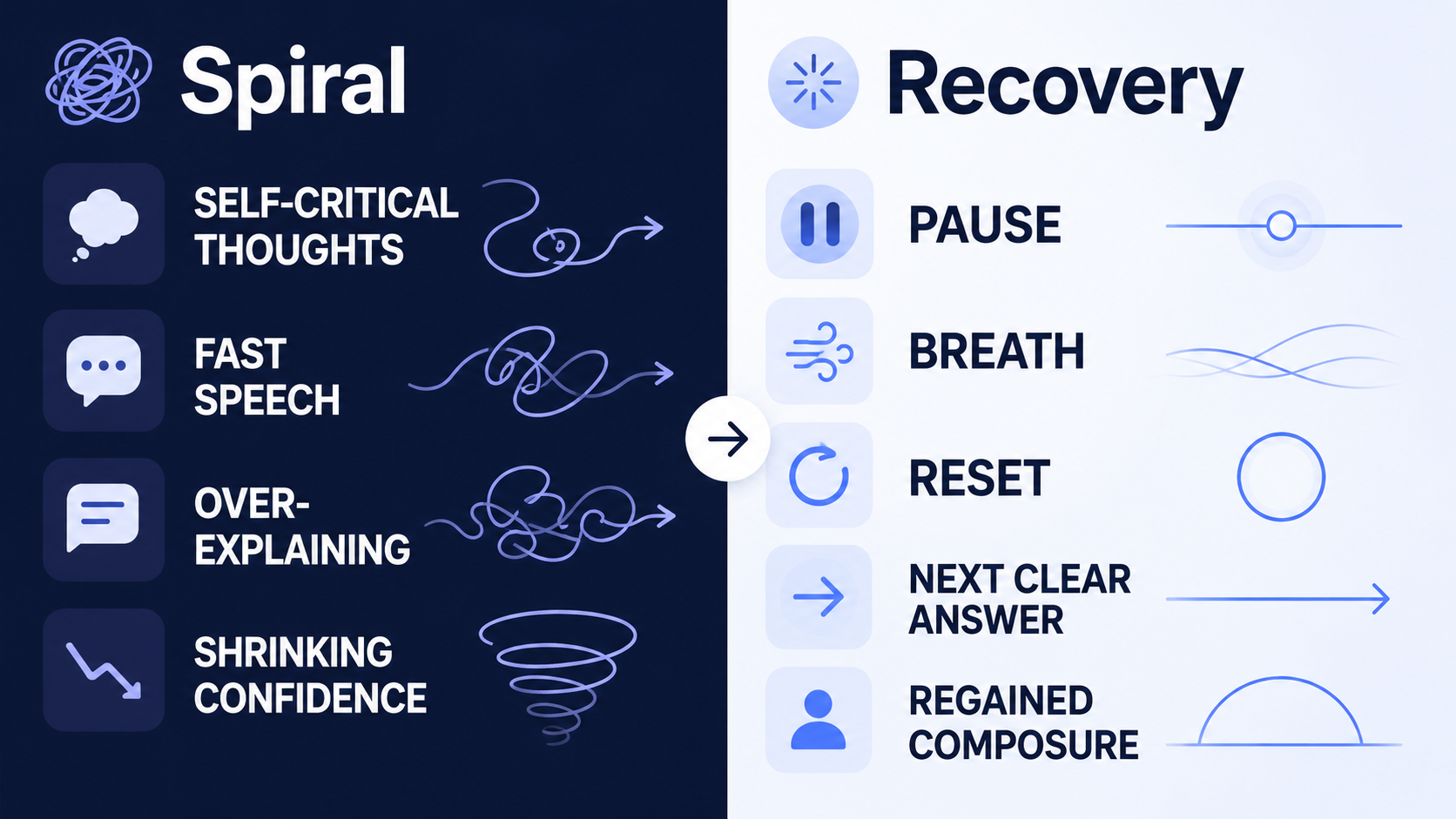
Once candidates internally decide they are “doing badly,” their behavior changes almost immediately. They begin speaking faster, monitoring themselves constantly, overexplaining simple points, apologizing unnecessarily, or trying to compensate with excessive technical detail.
Ironically, the emotional reaction to the weak answer often sounds worse than the answer itself.
The recovery panic is usually the real problem
One of the most common mistakes candidates make is trying to undo the bad answer immediately and emotionally.
You can often hear the shift happen in real time. The candidate stops communicating naturally and starts performing recovery:
- forcing extra depth into unrelated questions,
- interrupting themselves repeatedly,
- overcorrecting tiny details,
- or trying too hard to sound impressive again.
This creates visible tension in the interaction.
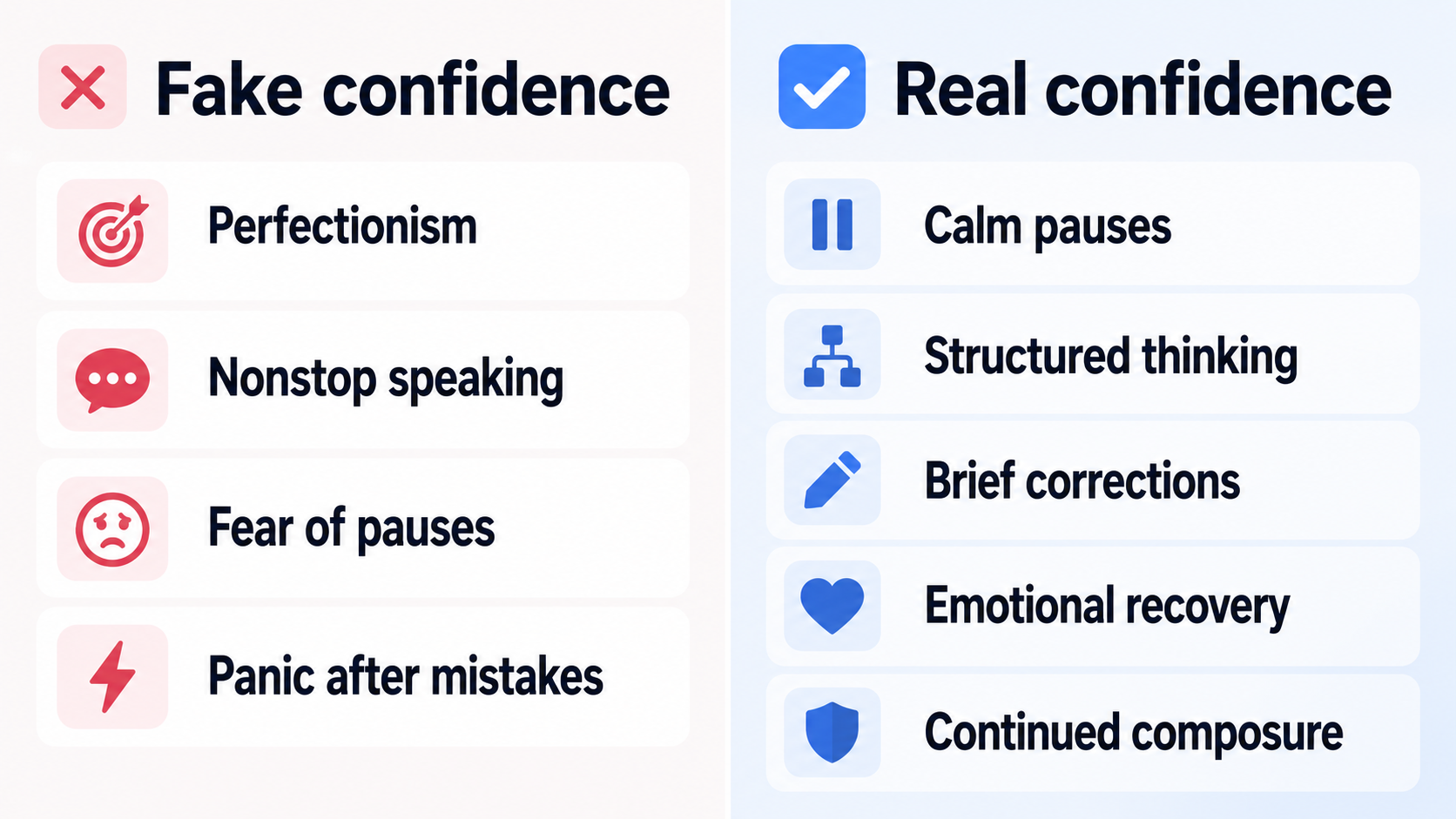
Strong interviewers generally tolerate imperfect answers very easily. What feels less comfortable is unstable communication energy afterward. Calm recovery signals maturity. Panic recovery signals loss of control.
That doesn't mean you should ignore mistakes entirely. It means recovery should look composed rather than reactive.
Good recovery is usually quiet
Many candidates assume recovery needs to be dramatic or visible. In reality, strong communicators often recover very subtly.
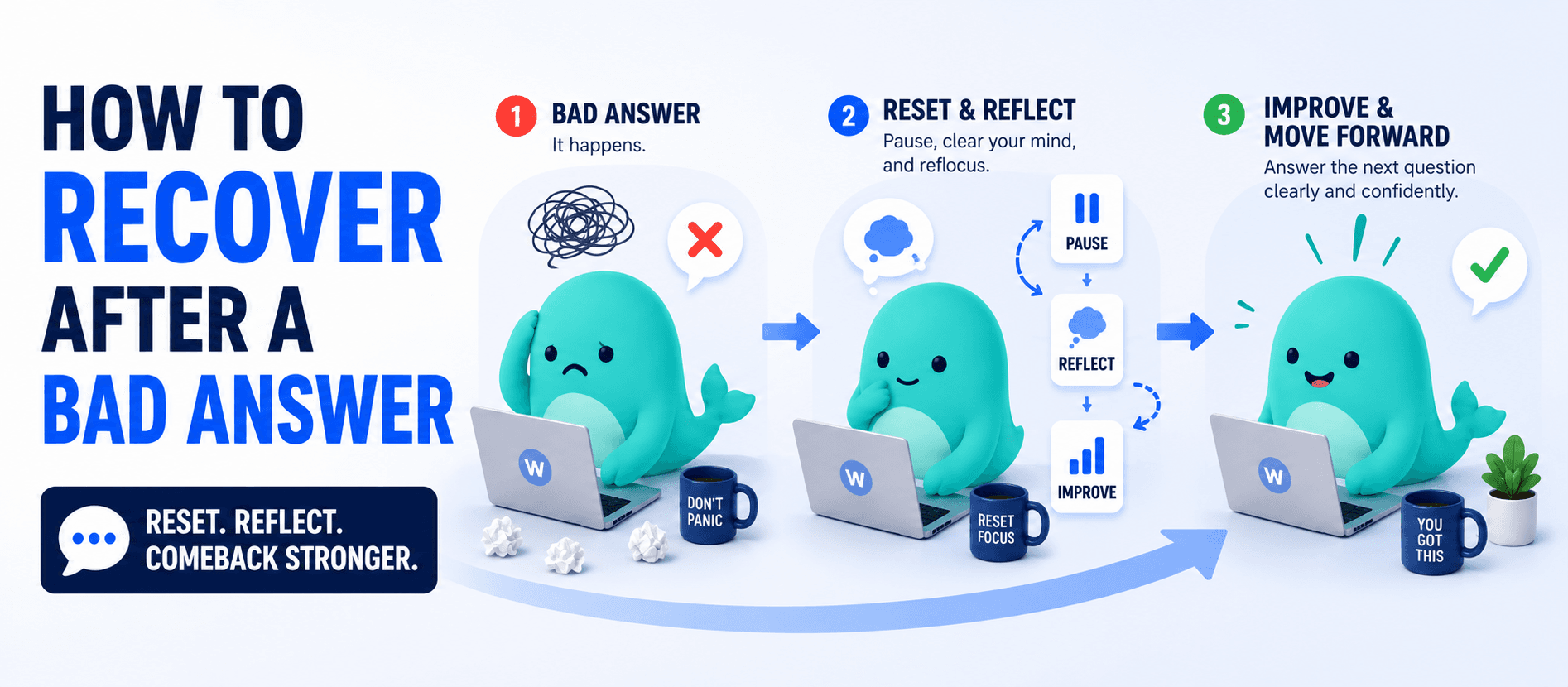
Sometimes the best recovery strategy is simply:
- slowing down,
- resetting mentally,
- and answering the next question clearly.
No apology speech required.
No visible emotional collapse.
No desperate attempt to prove competence immediately afterward.
This is especially true in technical interviews, where interviewers expect occasional uncertainty and imperfect phrasing. They care far more about how candidates handle difficult moments than whether every answer sounds perfectly polished.
What to do immediately after a weak answer
The first recovery window is surprisingly short. Usually you have about 10–20 seconds before emotional momentum either stabilizes or spirals further.
The first priority is attention control.
Your brain will naturally try to replay the answer while the interview continues, but continuing to analyze it in real time only increases cognitive overload. Strong candidates redirect attention quickly:
“That answer is over. Focus on the next interaction.”
This is less about confidence and more about mental resource management.
Physical regulation also matters more than most people realize. After a stressful moment, many candidates stay physiologically tense without noticing it: shallow breathing, clenched jaw, faster speech, narrowed attention. A small physical reset often restores clarity surprisingly fast.
Simple adjustments help:
- slower exhale,
- slightly reduced speaking pace,
- relaxed shoulders,
- deliberate pauses before answering.
Mental composure frequently follows physical composure.
Why this matters: Interviewers usually regain confidence in candidates very quickly once the conversation becomes structured and calm again.
Small corrections can actually improve credibility
Candidates are often unsure whether they should revisit a weak answer later in the interview. Usually the answer depends on emotional tone.
Panicked corrections tend to feel defensive. Calm clarifications often work very well.
This sounds confident:
“I realized I missed an important tradeoff in my previous answer. One thing I'd add is…”
This sounds emotionally unstable:
“Sorry, sorry — I explained that terribly. Let me completely restart.”
Interviewers generally respond positively to thoughtful self-correction because it signals awareness and composure under pressure. The key is brevity. You're adding clarity, not reopening the entire mistake emotionally.
Confidence is not the absence of mistakes
One reason interviews feel psychologically brutal is that candidates compare themselves to an imaginary perfect communicator who never freezes, rambles, forgets words, or struggles under pressure.
That person does not exist.
Experienced engineers, analysts, PMs, and senior candidates all occasionally:
- lose track of a sentence,
- misunderstand questions,
- forget examples,
- need time to think,
- or answer something imperfectly.
The real difference is recovery speed.
Strong communicators don't interpret every awkward moment as evidence that the interview is collapsing. They treat communication friction as normal. That mindset prevents secondary panic from hijacking the rest of the conversation.
The interview is still happening
After one weak answer, many candidates emotionally conclude the interview is already lost. Usually the interviewer has not reached that conclusion at all.
There may still be multiple opportunities ahead:
- behavioural questions,
- technical discussions,
- collaboration signals,
- problem-solving exercises,
- or recruiter feedback afterward.
A surprising number of successful interviews contain awkward moments somewhere in the middle. Interviewers rarely expect robotic perfection. More often, they remember whether the candidate remained thoughtful, communicative, and emotionally steady throughout the conversation.
That's the signal good recovery creates.
The real skill is learning how to continue imperfectly
Many candidates prepare only for ideal interview conditions. But real interviews are messy. Questions surprise you. Sentences fail halfway through. Your brain occasionally freezes. You lose track of structure. You feel pressure while speaking English.
The goal is not flawless performance.
The goal is staying functional and communicative even when things become uncomfortable.
That's why realistic spoken practice matters so much. Especially for non-native English speakers. You need repeated exposure to:
- recovering after losing your train of thought,
- restarting answers calmly,
- thinking under pressure,
- and continuing after mistakes without emotionally collapsing.
Over time, your nervous system stops interpreting every imperfect moment as a threat. And that's usually when interview communication starts sounding genuinely confident.
Practical target: Don't aim for a flawless interview. Aim for stable recovery after imperfect moments. That's a far more realistic — and far more valuable — communication skill.